
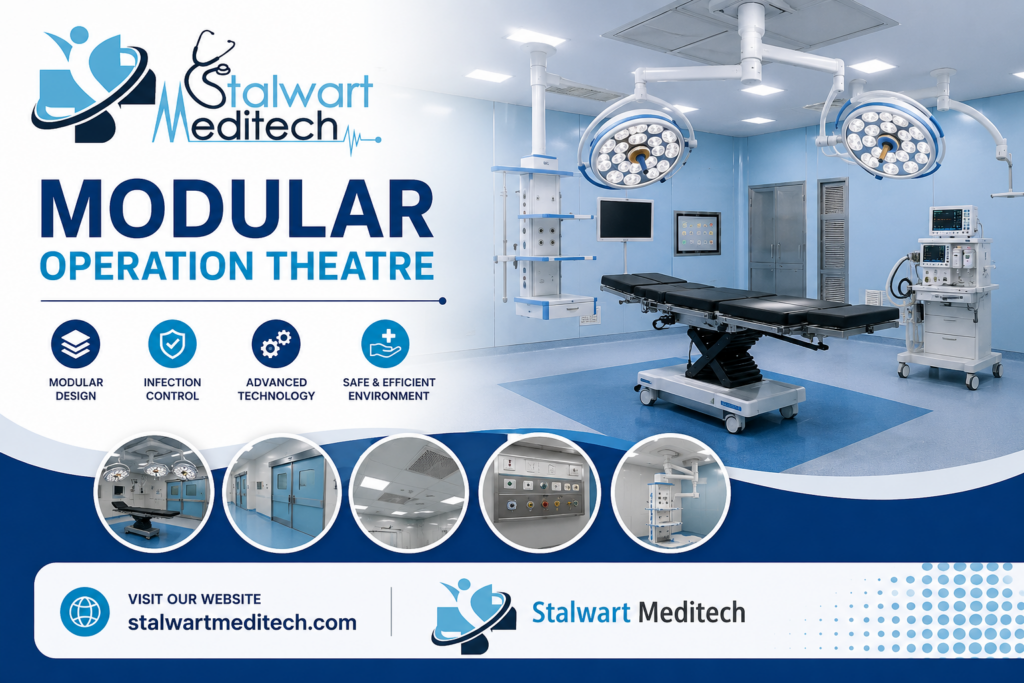
Imagine a hospital rushing to prepare for a complex cardiac surgery — and the OT (operation theatre) has outdated ventilation, flickering lights and walls that are nearly impossible to sterilize properly. It’s not just inconvenient. It’s dangerous. This is exactly the kind of problem a well-designed modular operation theatre is built to solve.
If you’re a hospital administrator, healthcare planner or facility manager exploring modular OT solutions, you’ve come to the right place. In this guide, we break down everything you need to know — from what modular OTs are, to how to choose the right Modular Operation Theatre Manufacturer for your facility.
What is a Modular Operation Theatre?
A modular operation theatre (OT) is a prefabricated, highly controlled surgical environment built using interlocking panels, advanced HVAC systems and integrated medical-grade infrastructure. Unlike traditional brick-and-mortar operation rooms, modular OTs are designed for precision, speed of installation and long-term hygiene compliance.
Think of it as building a surgical room the smart way — where every surface, every joint and every airflow channel is engineered to minimize infection risk and maximize the surgeon’s working comfort.
These systems are used across hospitals, nursing homes, day-care surgery centers and even military medical facilities. The demand for modular OT solutions has grown rapidly as healthcare facilities focus more on infection control and operational efficiency.
Traditional OT vs. Modular OT: At a Glance
| Feature | Traditional OT | Modular OT |
| Installation Time | 3–6 months (construction) | 4–8 weeks (prefabricated) |
| Infection Control | Moderate — depends on materials | High — seamless, easy-to-clean surfaces |
| Customization | Limited after construction | Highly flexible and reconfigurable |
| Maintenance | Difficult, requires renovation | Easy panel replacement |
| HVAC Integration | Retrofitted, often uneven | Integrated with HEPA filtration |
| Cost Over Time | Higher renovation costs | Lower lifecycle cost |
| Regulatory Compliance | Variable | Designed to meet NABH/ISO standards |
Key Features of a High-Quality Modular Operation Theatre
Not all modular OTs are created equal. When evaluating a modular operation theatre manufacturer, it’s important to understand what a truly well-built OT should include. Here are the core features to look for:
- Flush, coved wall panels — No sharp edges or corners where bacteria can hide
- HEPA-filtered laminar airflow — Maintains positive air pressure to keep contaminants out
- Integrated surgical lighting — Shadow-free, heat-free LED OT lights
- Medical gas pipeline systems — Oxygen, nitrous oxide and vacuum integrated into walls
- Antistatic, non-slip flooring — Safe for equipment and personnel
- Pass-through windows — Sterile transfer of instruments without opening the OT
- OT control panels — Temperature, humidity and pressure controls at your fingertips
- Airtight doors — Hermetically sealed to prevent air contamination
Feature vs. Clinical Benefit Table
| OT Feature | Clinical Benefit | Who It Matters To |
| Laminar Airflow (HEPA) | Reduces surgical site infections (SSI) | Surgeons, patients |
| Seamless Panel Joints | Prevents microbial build-up | Infection control teams |
| Integrated Lighting | Better visibility, less fatigue | Surgeons, anaesthesiologists |
| Medical Gas Integration | Safer, uninterrupted gas supply | Anaesthesia teams |
| Antistatic Flooring | Prevents electrostatic discharge near equipment | Equipment & biomedical teams |
| Pass-Through Window | Reduces door-opening, maintains sterility | Scrub nurses, OT assistants |
How to Choose the Right Modular Operation Theatre Manufacturer
This is where many hospitals make costly mistakes. Choosing a modular OT manufacturer isn’t just about price — it’s about compliance, quality of materials, after-sales support and experience in the healthcare sector.
Here’s a step-by-step process to guide your decision:
Step-by-Step Buying Process
| Step | Action | What to Look For |
| Step 1 | Define Your OT Requirements | Type of surgeries, room count, layout needs |
| Step 2 | Research Manufacturers | Years of experience, portfolio, client hospitals |
| Step 3 | Check Certifications | ISO 9001, CE marking, NABH compatibility |
| Step 4 | Request a Site Visit or Demo | See installed OTs in real hospital settings |
| Step 5 | Compare Quotations | Don’t just compare price — compare scope of supply |
| Step 6 | Evaluate AMC / Service Support | Annual maintenance contracts, spare part availability |
| Step 7 | Review the Warranty Terms | Minimum 5 years structural, 2 years on components |
| Step 8 | Finalize and Sign Contract | Milestones, timelines, penalty clauses |
Why Stalwart Meditech Stands Out as a Modular OT Manufacturer
At Stalwart Meditech, we’ve spent years working directly with hospitals, surgical centers and healthcare planners to deliver modular OT solutions that don’t just meet standards — they raise them.
What makes us different isn’t just our product quality. It’s the partnership approach we bring to every project. From the initial layout design to post-installation support, our team works alongside your hospital’s biomedical and administrative teams to ensure every detail is right.
Our modular operation theatres are designed to comply with NABH accreditation guidelines and we offer a full suite of services including:
- Custom layout planning and 3D visualization
- Turnkey installation with minimal disruption to hospital operations
- Integration with your existing medical gas and electrical infrastructure
- Comprehensive Annual Maintenance Contracts (AMC)
- HEPA filter replacement and airflo“““““““““““““““““““w testing services
Tips and Best Practices for Modular OT Planning
Pro Tips from Stalwart Meditech:
- Plan for future expansion — Choose a modular OT system that allows panel reconfiguration without full dismantling.
- Don’t compromise on airflow — Laminar airflow is the single most important factor in infection control. Insist on validation reports.
- Ask for DOP test certificates — Dispersion of Oil Particles testing verifies HEPA filter efficiency. Any reputable manufacturer should provide this.
- Include a scrub station in your OT suite design — Often overlooked, but critical for workflow efficiency.
- Request a layout review by your infection control officer — Their sign-off ensures the OT meets your hospital’s own protocols.
- Insist on local service support — A manufacturer without local technicians is a liability in emergencies.
Common Mistakes to Avoid When Setting Up a Modular OT
Watch Out For These Pitfalls:
- Choosing based on price alone — A cheap modular OT that fails accreditation will cost you far more in the long run.
- Ignoring ventilation specs — Not all HVAC systems are equal. Ask for Air Changes per Hour (ACH) data — minimum 20 ACH for Class 100 OTs.
- Skipping the site assessment — Floor load capacity, ceiling height and structural support all affect OT design.
- Not planning for infection zones — The OT corridor layout must clearly separate sterile, clean and disposal zones.
- Overlooking lighting standards — OT table illumination should meet a minimum of 40,000 lux. Don’t settle for less.
- No documented handover protocol — Always insist on a commissioning report and user training before going live.
Do’s and Don’ts Quick Reference
| Area | Do This | Avoid This |
| Vendor Selection | Visit installed projects, check credentials | Choose based on lowest quote alone |
| Airflow System | Demand HEPA + laminar airflow with DOP test | Accept simple split-AC or non-validated systems |
| Panel Material | Specify antibacterial, powder-coated steel panels | Allow standard PVC panels without certifications |
| Flooring | Use antistatic, seamless homogeneous vinyl | Use regular tiles with grout lines |
| Project Timeline | Build in buffer time for testing and validation | Rush to inaugurate without full commissioning |
| Maintenance | Sign a structured AMC from day one | Rely on ad-hoc repair calls |
Frequently Asked Questions (FAQs)
1. What is the typical cost of a modular operation theatre in India?
The cost of a modular OT varies based on size, class (Class 100, 1000 or 10,000) and the level of integration required. A standard single modular OT setup typically ranges from ₹25 lakhs to ₹80 lakhs or more. Stalwart Meditech offers customized quotations based on your specific layout and functional requirements.
2. How long does it take to install a modular operation theatre?
Most modular OT installations are completed within 4 to 8 weeks, depending on the size of the project and site readiness. This is significantly faster than conventional construction, which can take 3 to 6 months.
3. Are modular OTs compliant with NABH standards?
Yes — a properly designed modular OT from a reputable manufacturer will meet NABH (National Accreditation Board for Hospitals) guidelines. Always ask your manufacturer for documentation confirming compliance with NABH, ISO and local health authority requirements.
4. Can a modular OT be relocated or expanded later?
Absolutely. One of the biggest advantages of modular OT solutions is their flexibility. The panel-based construction allows for reconfiguration, expansion or even relocation with far less disruption and cost than conventional OTs.
5. What type of surgeries can be performed in a modular OT?
Modular operation theatres can be configured for virtually all surgical specialties — including general surgery orthopaedics, cardiac surgery, neurosurgery, gynaecology, ophthalmology and ENT. The class of OT (airflow classification) is chosen based on the surgical specialty’s sterility requirements.
6. How do I maintain a modular OT for long-term performance?
Regular maintenance includes HEPA filter replacement (typically every 12–18 months), DOP testing for filter integrity, surface disinfection protocols and annual calibration of pressure and temperature systems. A structured AMC with your manufacturer is the best way to ensure consistent performance.
Conclusion
Setting up or upgrading an operation theatre is one of the most consequential investments a healthcare facility can make. The right modular OT doesn’t just create a safer surgical environment — it builds confidence in your clinical teams, supports accreditation and ultimately leads to better outcomes for patients.
Whether you’re building a new hospital, expanding an existing surgical block or simply modernizing an outdated OT, the process starts with partnering with the right modular operation theatre manufacturer — one that brings both technical expertise and a genuine understanding of clinical workflows.
At Stalwart Meditech, we bring that combination to every project we take on. Our modular OT solutions are engineered to last, designed for compliance and built around the real-world needs of Indian and international healthcare facilities.
Ready to plan your modular operation theatre?
Get in touch with the team at Stalwart Meditech for a free consultation, site assessment and customized OT design proposal. Let’s build a surgical space your team can trust.
Contact us today — because every surgery deserves the best environment possible.