Introduction
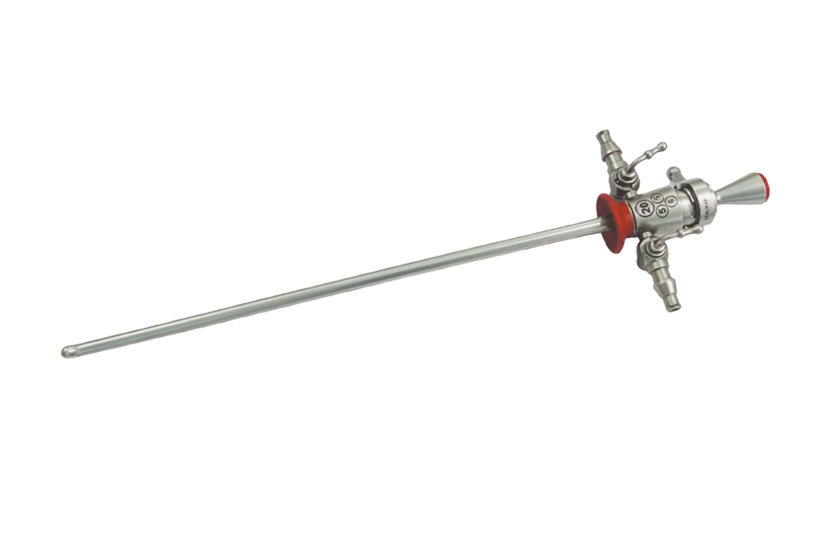
Cystoscopy Sheath is an important medical instrument used in urology procedures to safely guide and protect the cystoscope. It is a hollow tube-like structure made from stainless steel or high-grade medical alloy. Its main purpose is to safely pass the cystoscope through the urethra into the bladder and provide a clear working channel during the procedure.
Cystoscopy sheath is an essential part of the cystoscopy system, without which bladder examination or treatment procedures cannot be performed efficiently. It also contains an irrigation system that allows sterile fluid flow, which helps expand the bladder and provides clear internal visibility.
Modern cystoscopy sheaths are designed with advanced engineering to ensure maximum patient comfort, safety, and surgeon control. They are reusable and sterilizable instruments widely used in hospitals and surgical centers.
Applications
Cystoscopy sheath is mainly used in the urology department where diagnosis and treatment of the urinary system are performed. Its primary application is in cystoscopy procedures, where the internal examination of the bladder and urethra is done.
This instrument is used to detect bladder infections, urinary tract infections (UTI), stones, tumors, inflammation, and other abnormalities. When the doctor inserts the cystoscope into the body, the sheath ensures the process is safe and controlled.
Cystoscopy sheath is also used in biopsy procedures where suspicious tissue samples are collected for laboratory testing. In addition, it is used in bladder stone removal, blockage clearing, and minor surgical procedures.
In hospital operating rooms (OT), it is used in a sterile environment where urologists perform advanced diagnostic and therapeutic procedures. This device makes the procedure smooth, safe, and efficient.
Design and Structure
Cystoscopy sheath is a cylindrical hollow tube with an inner channel and irrigation ports. Its design allows easy insertion of the cystoscope and smooth movement during the procedure.
The outer surface is polished to reduce friction during insertion and minimize patient discomfort. The inner channel is precisely engineered so that optical instruments and surgical tools can pass easily.
Side irrigation ports allow sterile fluid to flow into the bladder, improving visibility. This design provides the surgeon with a clear working field.
Working Principle
The working principle of the cystoscopy sheath is simple yet highly effective. When the sheath is inserted through the urethra into the bladder, it acts as a protective guide for the cystoscope.
Through this system, sterile saline fluid is injected into the bladder, causing it to expand and making the internal walls clearly visible. In this expanded space, the doctor performs inspection using the cystoscope.
The sheath ensures the instrument remains stable and allows smooth movement during the procedure, enabling accurate diagnosis and treatment.
Types of Cystoscopy Sheath
Cystoscopy sheaths are mainly compatible with rigid and flexible systems.
Rigid sheaths are commonly used in traditional cystoscopy procedures where high precision and stable control are required. Flexible systems offer slightly better adaptability, improving patient comfort.
Different sizes (Fr sizes) are available depending on patient anatomy and procedure requirements.
Advantages
The biggest advantage of a cystoscopy sheath is that it makes minimally invasive urinary procedures safe and efficient. It allows doctors to examine the bladder without performing open surgery.
It provides smooth insertion, reducing patient discomfort. The irrigation system ensures clear visibility, which helps in accurate diagnosis.
Being reusable, it is cost-effective and provides long-term benefits for hospitals.
Importance in Medical Field
Cystoscopy sheath is an essential instrument in urology that improves diagnostic accuracy. Without it, cystoscopy procedures cannot be completed.
It plays an important role in early detection of urinary diseases and helps doctors clearly visualize internal organs.
Its usage is continuously increasing in modern medical technology due to its reliability and efficiency.
Maintenance and Sterilization
Cystoscopy sheath is a reusable medical instrument, so proper cleaning and sterilization are very important. After each use, it is disinfected using the autoclave sterilization process.
It is carefully handled and stored to prevent surface damage and maintain performance. Regular inspection is done to identify any wear and tear.
FAQ Section
Q1: What is a cystoscopy sheath?
A cystoscopy sheath is a hollow medical tube that safely guides the cystoscope through the urinary tract.
Q2: Where is it used?
It is mainly used in hospital urology departments for bladder and urethra examination.
Q3: Is it reusable?
Yes, it is reusable and can be used again after proper sterilization.
Q4: Is it safe for patients?
Yes, it is a minimally invasive and safe medical instrument when used by trained doctors.
Q5: What does the irrigation system do?
It allows sterile fluid to flow into the bladder, improving internal visibility.
Q6: Are different sizes available?
Yes, different Fr sizes are available depending on patient and procedure requirements.
Q7: How is it maintained?
It is maintained through proper cleaning and autoclave sterilization processes.