
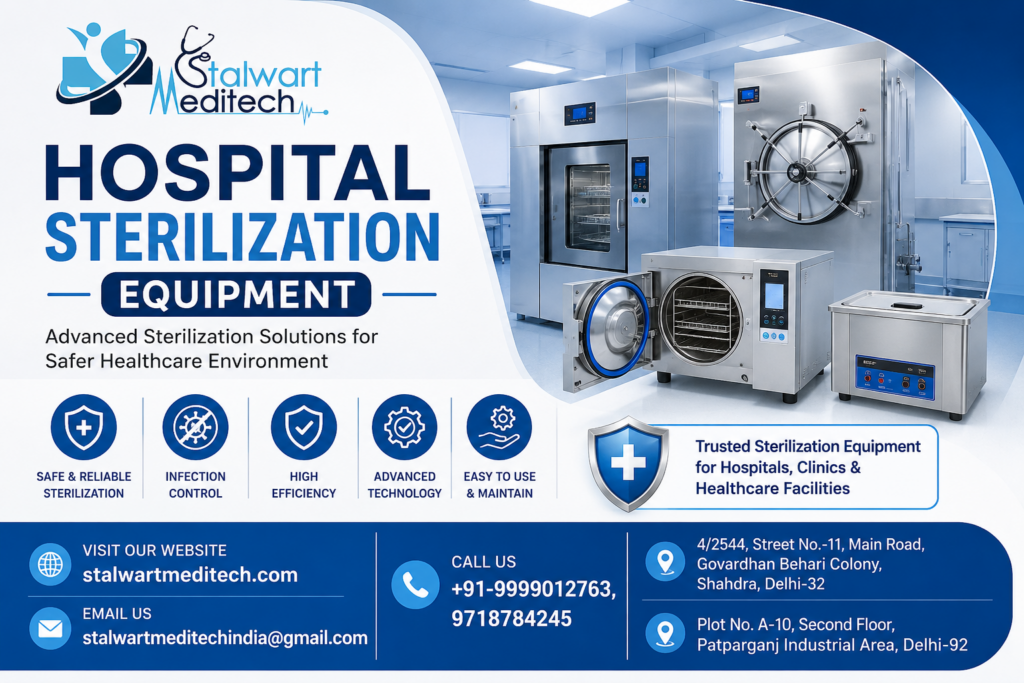
Picture this: a surgeon is scrubbed in, the patient is on the table and everyone in the room is counting on one thing working perfectly — the instruments being completely free of anything that could cause an infection. No pressure, right? Except there is pressure, quite literally, because that’s how most sterilization equipment actually works.
Every year, hospital-acquired infections (HAIs) affect millions of patients worldwide and a shocking number of these cases trace back to improperly sterilized instruments or outdated equipment. It’s not always about negligence — sometimes it’s simply about not having the right sterilization technology in place or not understanding how to use it correctly.
If you’re a hospital administrator, procurement officer or someone setting up a new healthcare facility, this guide is for you. We’ll walk through everything you need to know about Hospital Sterilization Equipment in 2026 — what it is, the different types available, how to choose the right one and the common mistakes to avoid. And as a leading medical equipment manufacturer in India, we at Stalwart Meditech see these questions come up almost every day, so we’ve packed this guide with practical, real-world insights.
What is Hospital Sterilization Equipment, Really?
In the simplest terms, sterilization equipment is machinery used to eliminate every form of microbial life — bacteria, viruses, fungi and spores — from surgical instruments, medical devices and other reusable hospital tools. This is different from disinfection, which only reduces germs to a “safe” level. Sterilization goes further: it aims for zero.
Think of it like the difference between wiping down a kitchen counter and boiling a jar to can homemade pickles. One reduces risk. The other eliminates it entirely. In a hospital, where a single contaminated instrument can lead to a life-threatening infection, that difference matters enormously.
Why This Matters More Than Ever in 2026
With rising antibiotic resistance and increasingly complex surgical procedures, hospitals can’t afford to cut corners. Regulatory bodies have also tightened compliance standards, meaning facilities need equipment that isn’t just effective, but also traceable, validated and easy to maintain.
Types of Hospital Sterilization Equipment
Not all instruments can be sterilized the same way. A delicate endoscope, for instance, can’t handle the same heat as a stainless steel forceps. That’s why hospitals typically rely on a mix of sterilization technologies.
1. Steam Sterilizers (Autoclaves)
The workhorse of hospital sterilization. Autoclaves use high-pressure steam to kill microorganisms and remain the gold standard for heat-resistant instruments.
2. Ethylene Oxide (EO) Sterilizers
Ideal for heat-sensitive equipment like plastic tubing or electronic devices. It’s a gas-based method, so it takes longer but is gentler on delicate materials.
3. Hydrogen Peroxide Plasma Sterilizers
A faster, low-temperature alternative to EO gas — commonly used for sterilizing sensitive endoscopic and robotic surgical instruments.
4. Dry Heat Sterilizers
Useful for materials that could corrode or degrade with moisture, such as powders, oils and certain metal instruments.
5. UV and Chemical Sterilization Units
Often used as a supplementary layer — for example, in sterilizing smaller tools or surfaces in between larger cycles.
Comparison Table: Types of Sterilization Equipment
| Equipment Type | Best For | Cycle Time | Cost Level |
| Steam Autoclave | Metal instruments, general surgical tools | 15–60 mins | Moderate |
| EO Gas Sterilizer | Plastics, electronics, heat-sensitive items | 1–12 hours | High |
| Hydrogen Peroxide Plasma | Endoscopes, robotic instruments | 28–75 mins | High |
| Dry Heat Sterilizer | Powders, oils, moisture-sensitive metals | 1–2 hours | Low to Moderate |
| UV / Chemical Units | Surfaces, supplementary sterilization | Minutes | Low |
Note: Cycle times and costs can vary based on load size, equipment brand and facility scale. This table is meant as a general reference point.
Key Benefits of Investing in Quality Sterilization Equipment
- Reduced Infection Rates: Properly sterilized instruments directly lower the risk of surgical site infections.
- Regulatory Compliance: Modern equipment helps hospitals meet NABH, ISO and other certification requirements.
- Operational Efficiency: Faster cycle times mean instruments are ready sooner, reducing surgery delays.
- Instrument Longevity: The right sterilization method protects expensive instruments from premature wear.
- Traceability: Many modern sterilizers now offer digital logs, useful for audits and quality checks.
Feature & Benefit Table
| Feature | Why It Matters |
| Digital Cycle Monitoring | Ensures each cycle meets required temperature and pressure — critical for audits. |
| Automatic Door Locking | Prevents accidental interruption mid-cycle, avoiding wasted sterilization runs. |
| Built-In Printer / Data Logger | Creates a paper or digital trail for compliance and quality assurance. |
| Vacuum-Assisted Drying | Reduces moisture retention, which can otherwise support bacterial regrowth. |
Note: These features are increasingly standard in mid-to-high range sterilizers manufactured for hospital use in 2026.
Step-by-Step: How to Choose the Right Sterilization Equipment
Choosing sterilization equipment isn’t just about picking the biggest or most expensive machine. It’s about matching the equipment to your facility’s actual needs.
Buying Guide Checklist
| Step | What to Check |
| 1. Assess Instrument Types | List out what needs sterilizing — metal, plastic, electronic or delicate scopes. |
| 2. Estimate Daily Volume | Match chamber size and cycle speed to your daily patient/surgery load. |
| 3. Check Certifications | Look for ISO, CE or relevant national medical device certifications. |
| 4. Evaluate After-Sales Support | Confirm availability of maintenance, spare parts and technician response time. |
| 5. Compare Long-Term Costs | Factor in energy use, consumables and servicing — not just the upfront price. |
| 6. Choose a Trusted Manufacturer | Partner with an established medical equipment manufacturer with a proven track record in India. |
Note: Walking through this checklist with your infection control team can help avoid costly mismatches down the line.
Tips and Best Practices
- Don’t overload the chamber. Steam and gas need to circulate freely around every instrument.
- Train your staff regularly. Equipment is only as good as the person operating it.
- Use biological indicators periodically to verify that your sterilizer is actually achieving full sterilization, not just running a cycle.
- Keep a maintenance calendar. Preventive servicing avoids sudden breakdowns during peak hours.
- Document everything. Cycle logs protect your facility during audits and inspections.
Common Mistakes to Avoid
Do’s and Don’ts
| Do | Don’t |
| Pre-clean instruments before sterilizing | Sterilize instruments with visible debris still on them |
| Follow manufacturer cycle guidelines | Shorten cycles to save time |
| Regularly calibrate and service equipment | Wait until a breakdown to call for maintenance |
| Store sterilized instruments in a dry, sealed area | Leave sterilized packs exposed to humidity or dust |
Note: Even top-tier equipment can fail to deliver results if these basic practices are overlooked.
Frequently Asked Questions
Q1. What is the most common type of hospital sterilization equipment?
Steam autoclaves remain the most widely used, thanks to their reliability, speed and low operating cost for heat-resistant instruments.
Q2. How often should sterilization equipment be tested?
Most facilities test biological indicators weekly, with mechanical and chemical checks performed on every cycle.
Q3. Can all medical instruments be steam sterilized?
No. Heat-sensitive items like certain plastics or electronics require alternative methods such as EO gas or hydrogen peroxide plasma sterilization.
Q4. What certifications should I look for when buying sterilization equipment?
Look for ISO 13485, CE marking and compliance with local regulatory bodies, along with proven after-sales support from the manufacturer.
Q5. How long does a typical sterilization cycle take?
It depends on the method — steam cycles can take 15–60 minutes, while EO gas sterilization can take several hours including aeration time.
Q6. Why should I choose an Indian medical equipment manufacturer?
Local manufacturers often provide faster servicing, easier spare part availability and equipment designed with regional power and infrastructure conditions in mind.
Final Thoughts
Choosing the right hospital sterilization equipment isn’t just a procurement decision — it’s a patient safety decision. Whether you’re setting up a new facility or upgrading an existing one, the goal remains the same: reliable, compliant and efficient sterilization that your medical team can trust without a second thought.
At Stalwart Meditech, we’ve spent years working closely with hospitals and healthcare facilities across India to design and supply sterilization equipment that fits real-world clinical needs — not just specification sheets. If you’re exploring options for your facility, we’d be glad to help you figure out what actually fits, no pressure, no jargon.
Visit: https://stalwartmeditech.com/contact-us/
Call: +91-9999012763, 9718784245
Email: stalwartmeditechindia@gmail.com
Address: Plot No. A-10, Second Floor, Patparganj Industrial Area, Delhi-92,
4/2544, Street No.-11, Main Road, Govardhan Behari Colony, Shahdra, Delhi-32