
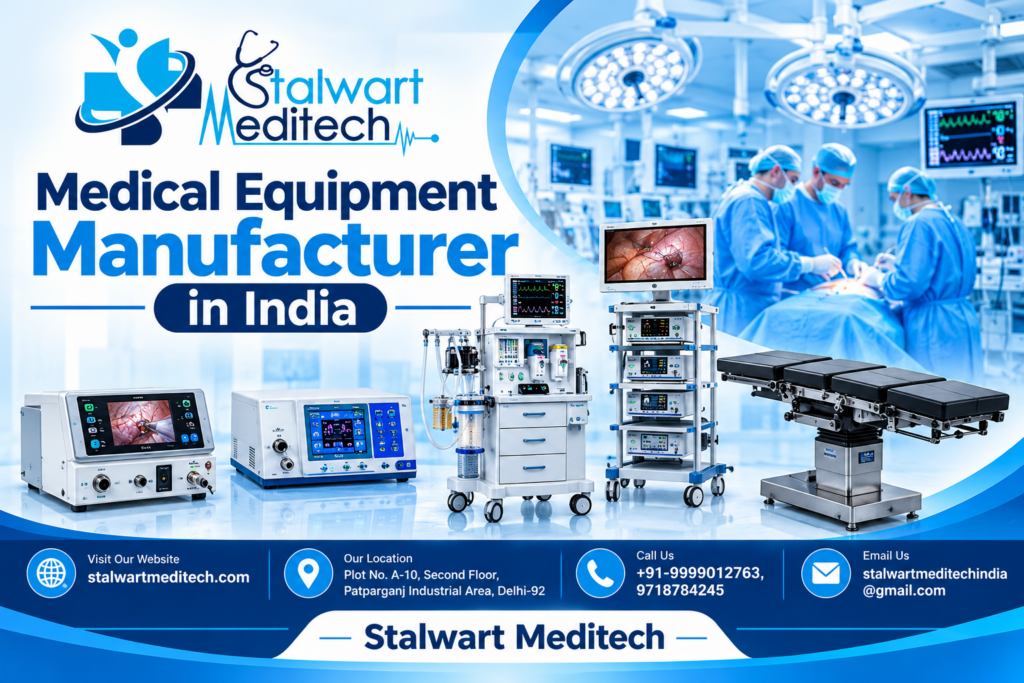
Finding a medical equipment manufacturer India-wide is easy. Verifying the right one is harder. Operation theatre, laparoscopy and gynecology equipment stays in service for years, so a weak choice shows up later as downtime, slow repairs and unplanned costs.
Buyers usually worry about product quality, everyday reliability, technical support and long-term value. This guide helps hospital administrators, doctors, procurement managers, clinic owners and biomedical engineers evaluate a Medical Equipment Manufacturer in India step by step. You will learn how manufacturers differ from suppliers, what to compare, which documents to request, and which mistakes to avoid.
Quick Answer: How Do You Choose a Reliable Medical Equipment Manufacturer in India?
Confirm the company’s actual role, match products to your clinical needs, compare verified specifications, and request regulatory documents. Then check installation, training, warranty, spare parts and service support in writing, and compare total cost of ownership rather than the lowest quotation.
What Is a Medical Equipment Manufacturer in India?
A medical equipment manufacturer designs, produces, assembles, tests and supplies healthcare equipment, depending on its capabilities. Many companies do only some of these things, so the label alone tells you little. The same applies to a medical device manufacturer in India and to medical equipment suppliers in India.
- Manufacturer: makes the product or controls its design and production.
- Distributor or supplier: sells products made by other companies, often with local stock and support.
- Importer: brings foreign-made equipment into India and carries related regulatory responsibilities.
- Service provider: installs, maintains or repairs equipment, sometimes for other brands.
One business can fill several roles. Ask each shortlisted company which role applies to which product, and where it is made, tested and serviced.
Types of Medical Equipment Available for Hospitals
Medical equipment for hospitals spans many categories, and not every manufacturer supplies all of them. Compare like with like.
| Equipment Category | Typical Purpose | What Buyers Should Check |
| Laparoscopy equipment | Visualization and support for minimally invasive abdominal surgery | Camera resolution, light source, insufflator specifications, instrument compatibility |
| Hysteroscopy equipment | Diagnostic and operative uterine procedures | Scope sizes, fluid management, sterilization method |
| Urology instruments and equipment | Endoscopic urinary tract procedures | Instrument range, reprocessing guidance, accessory availability |
| Endoscopy camera systems | Visualization during endoscopic procedures | Image quality, connectivity, compatible scopes and monitors |
| Electro surgical units | Controlled cutting and coagulation | Output modes, safety alarms, accessory compatibility |
| Gynecology equipment | Diagnostic and procedural women’s healthcare | Intended procedures, ease of cleaning, service access |
| Medical-grade monitors | Clinical display of surgical or diagnostic images | Resolution, brightness, input ports, cleanability |
| Modular operation theatres | Engineered OT walls, ceilings and integrated utilities | Design drawings, materials, installation timeline, standards followed |
| Medical gas pipeline systems | Delivering medical gases to OTs, ICUs and wards | Design approach, testing and commissioning records, alarms |
| Hospital furniture and related infrastructure | OT tables, beds and supporting fixtures | Load ratings, materials, adjustability, warranty |
How to Choose the Best Medical Equipment Manufacturer in India
Work through these ten criteria and score every shortlisted company on the same sheet. This applies equally when you are choosing a surgical equipment manufacturer or a full hospital equipment manufacturer.
- Product quality and reliability. Inspect build, finish and consistency between units. Ask for quality-system documents and, where possible, request a demonstration or visit a working installation.
- Product suitability. Confirm the equipment fits the procedures your team actually performs. Involve the surgeons and nurses who will use it.
- Technical specifications. Compare written, verified specifications side by side. Marketing descriptions are not specifications.
- Regulatory and compliance documentation. Ask which Indian requirements apply to each product under the Medical Devices Rules, 2017, and request the relevant licences, registrations or certificates. Verify them with the issuing body where possible.
- Manufacturer experience. Review years in operation, relevant product expertise, manufacturing capability and verifiable company details such as registered address and contacts.
- After-sales support. Ask who services the equipment, how quickly engineers respond, and whether support covers your city.
- Warranty and spare parts. Get warranty scope, duration, exclusions and spare-part availability in writing.
- Installation and training. Confirm whether setup, commissioning and staff orientation are included, particularly for OT systems.
- Equipment compatibility. Check fit with existing scopes, monitors, power supply, gas outlets and software.
- Total cost of ownership. Add purchase price, installation, consumables, servicing, spares and expected lifespan.
No single factor should decide the purchase. The cheapest quotation may carry high service costs, and a well-known brand may not fit your procedures or budget. Weigh all ten together.
Why Quality, Safety, and Documentation Matter
Documentation shows whether a product is understood, controlled and supportable. Request these before ordering:
- Technical datasheets and operating manuals to confirm specifications and daily use.
- Intended use and operating limitations, including what the device is not meant for.
- Regulatory documents applicable to the product. The Central Drugs Standard Control Organisation (CDSCO, cdsco.gov.in) publishes the Indian medical device framework. Check any ISO 13485 certificate for scope, validity and issuing body.
- Cleaning, disinfection and sterilization instructions your reprocessing team can follow.
- Maintenance and service requirements, including intervals and who may perform them.
- Staff training and safe-use procedures for clinical and biomedical teams.
A certificate image on a website is not proof by itself. Confirm that it covers the exact product you are buying, that it is current, and that the company name matches. Treat general industry standards as reference points, not as evidence that a particular device meets them.
Medical Equipment Buying Checklist for Hospitals
Use this before placing any order:
- Does the product meet the intended clinical requirements, as confirmed by end users?
- Are the technical specifications documented in writing?
- Is it compatible with existing instruments, utilities and infrastructure?
- Are the required regulatory documents available and verified?
- What installation and training support is included?
- What are the warranty conditions and exclusions?
- How are maintenance, response times and spare parts handled?
- What is the estimated total ownership cost?
- Has the supplier’s background, role and service capability been checked?
Common Mistakes to Avoid When Selecting a Medical Equipment Manufacturer
| Mistake | Practical Fix |
| Choosing solely on the lowest quotation | Compare total cost of ownership over the expected lifespan |
| Ignoring equipment compatibility | Test or confirm fit with current scopes, monitors and utilities before ordering |
| Overlooking documentation and regulatory requirements | Request documents early and verify them |
| Failing to review after-sales support | Ask for service locations, response times and engineer contacts |
| Not checking warranty terms | Obtain warranty scope, duration and exclusions in writing |
| Underestimating maintenance costs | Request an annual maintenance estimate and spare-parts price list |
| Buying features you do not need | Let clinicians define must-have features first |
| Accepting unverified performance or certification claims | Ask for evidence, such as test records, certificates and demonstrations |
Why Consider Stalwart Meditech for Medical Equipment Solutions?
Stalwart Meditech Private Limited was founded in 2013 and is based in Delhi’s Patparganj Industrial Area. It works under the philosophy “Care with Concern.” According to its website, the company designs and manufactures Modular Operating Theatres that comply with NABH standards. Its product pages cover gynecology, hysteroscopy, endoscopy camera systems, medical-grade monitors, laparoscopy, urology, electro surgery units, ENT, arthroscopy, modular operation theatres, medical gas pipelines and hospital furniture. For facilities seeking healthcare equipment solutions from one company, that breadth may be convenient. As with any medical equipment company in India, verify each item.
The manufacturing statement on the website refers specifically to modular operation theatres. For other categories, ask the team whether a product is made in-house, sourced from partners or supplied under another arrangement, and who handles installation and service. The company’s certification page displays compliance documents. Review them for scope, validity and product coverage, as you would for any supplier.
To evaluate the company, browse the official website and its catalogues, then use the contact page to discuss your requirements and request the documents from your checklist. Our guides to laparoscopy equipment, hysteroscopy instruments and gynecology equipment can help you prepare specifications. For a broader overview, read our article on trusted healthcare solutions.
Frequently Asked Questions
What does a medical equipment manufacturer in India do?
It designs, produces, assembles, tests and supplies healthcare equipment for hospitals and clinics. Capabilities vary by company, so buyers should confirm which of these activities the company performs itself for each product, and where manufacturing and testing take place.
How is a manufacturer different from a supplier?
A manufacturer makes the equipment or controls its design and production. A supplier or distributor sells equipment made by others. Some companies do both, so ask for each product which role applies and who provides warranty, installation and servicing.
What documents should hospitals request before buying medical equipment?
Request technical datasheets, operating manuals, intended-use information, applicable regulatory documents, quality certificates, cleaning and sterilization instructions, maintenance requirements and warranty terms. Verify that each certificate covers the specific product, remains valid and carries the correct company name.
Is the lowest quotation the best choice?
Not necessarily. A low price can hide higher costs for installation, consumables, servicing and spare parts, or weaker support. Compare total cost of ownership, specifications, documentation and service commitments across shortlisted companies before deciding.
How can I assess a manufacturer’s after-sales support?
Ask who services the equipment, where engineers are based, typical response times, warranty coverage and spare-part availability, and get these in writing. Where possible, speak with biomedical engineers at facilities already using the product.
Conclusion
The best choice is the manufacturer whose products suit your procedures, whose claims you can verify, and whose support you can rely on after installation. Focus on product suitability, quality, documentation, compatibility, after-sales support and total cost of ownership, rather than price or reputation alone.
Compare suppliers carefully and request verified product information before any purchase. Hospitals and healthcare professionals can explore Stalwart Meditech’s product range or contact the team to discuss their equipment requirements.
Contact us :- https://stalwartmeditech.com/contact-us/