
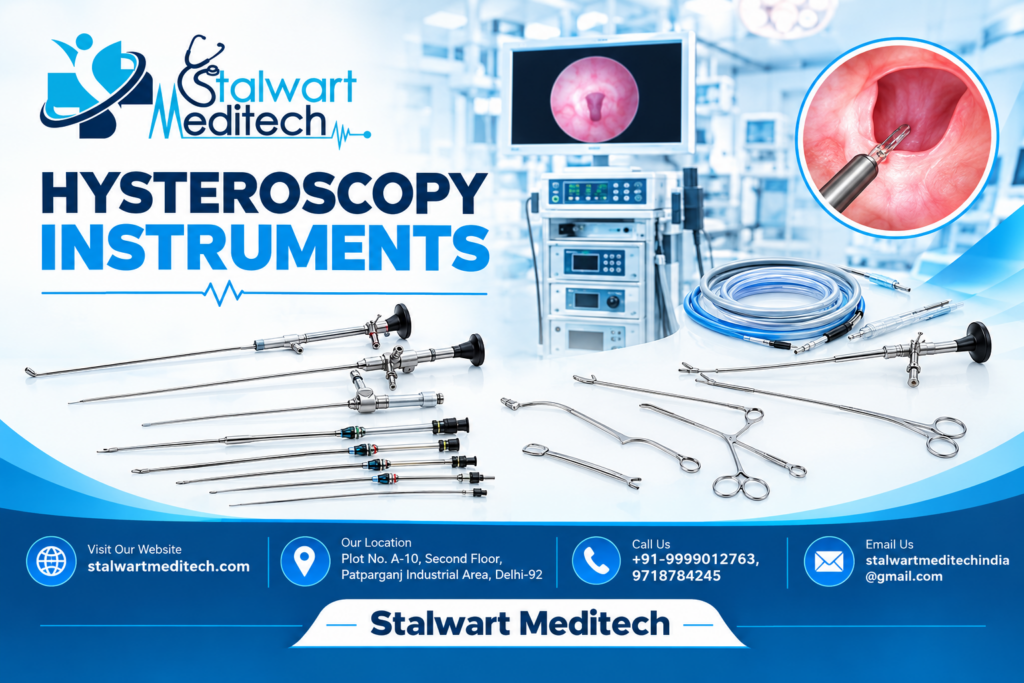
Hysteroscopy Instruments are the devices that let gynecologists see and treat the inside of the uterus through the cervix, without an abdominal incision. They range from the hysteroscope itself to sheaths, forceps, scissors, resectoscopes, camera systems and fluid management equipment. Together they support both diagnostic and operative hysteroscopy. This guide covers the main instrument types, how a system fits together, key selection criteria and a practical buying checklist for hospitals and clinics in India.
Introduction
Hysteroscopy is a core minimally invasive gynecology technique. It is used to investigate abnormal uterine bleeding, suspected intrauterine abnormalities and other uterine concerns. Its value depends heavily on the equipment behind it.
Clear visualization, instruments that fit the scope, reliable fluid management and proper reprocessing all affect how smoothly a procedure runs. For procurement teams, a hysteroscopy setup is a system of compatible parts, not a single device. The rest of this guide explains each part and how to evaluate it.
Quick Answer: What Are Hysteroscopy Instruments?
Hysteroscopy instruments are medical devices used to view and treat the inside of the uterus through the cervix. They include hysteroscopes, sheaths, camera and light systems, forceps, scissors, resectoscopes and fluid management equipment. Trained gynecologists use them for both diagnostic examination and operative procedures.
What Are Hysteroscopy Instruments?
A hysteroscope is a slim, telescope-like device passed through the cervix into the uterine cavity. It transmits light in and images out, usually to a camera and monitor. The other instruments support this view, whether by delivering fluid, taking tissue or treating a lesion.
At a high level, the two procedure types differ in purpose:
- Diagnostic hysteroscopy is mainly for inspecting the uterine cavity.
- Operative hysteroscopy adds instruments that perform an intervention, such as a biopsy or removal of a selected lesion.
Which equipment is needed depends on the procedure, the system design and the clinician’s requirements.
Types of Hysteroscopy Instruments
Hysteroscopes and telescopes. These provide the optical view. They come in different diameters and viewing angles. Choice depends on the intended application and the sheath system used.
Diagnostic hysteroscopy instruments. These are typically a telescope with a diagnostic sheath that allows fluid inflow and outflow. They are designed mainly for inspection.
Operative hysteroscopy instruments. These include operative sheaths with working channels, plus instruments passed through them. A resectoscope is a separate category used for certain operative procedures.
Grasping and biopsy forceps. These are used to grasp or sample tissue through a working channel.
Scissors and tissue-removal instruments. These are used to cut or remove selected intrauterine tissue. Designs vary by manufacturer and by the channel they fit.
Sheaths, working channels and accessories. The sheath surrounds the telescope and carries fluid. Its working channel determines which instruments can pass through.
Camera and visualization systems. A camera head, camera control unit and light source convert the optical image to a display. A medical-grade monitor is usually part of this chain.
Fluid irrigation and management equipment. Pumps and tubing sets deliver and manage distension fluid during the procedure.
Not every instrument suits every hysteroscope. Diameter, channel size and connector design vary, so always confirm compatibility with the manufacturer.
Key Components of a Hysteroscopy System
A hysteroscopy system works as a chain. Light travels through the scope into the uterine cavity. The image returns to the camera and then to the monitor. Fluid equipment keeps the cavity distended, and operative instruments are added when an intervention is planned.
| Component | Main purpose | Selection consideration |
| Hysteroscope | Visual examination | Intended application and compatibility |
| Camera system | Displays the procedural image | Image quality and system compatibility |
| Light source | Illuminates the viewing area | Compatible illumination and reliable operation |
| Operative instruments | Support specific procedures | Instrument type, working channel, and intended use |
| Fluid management equipment | Supports controlled fluid delivery or management | Procedure requirements and system compatibility |
A weakness in any one link, such as an incompatible light cable, can limit the whole system.
Diagnostic vs. Operative Hysteroscopy Instruments
| Aspect | Diagnostic instruments | Operative instruments |
| Intended purpose | Inspection of the uterine cavity | Intervention, such as biopsy or lesion removal |
| Typical features | Telescope, diagnostic sheath, often smaller overall profile | Operative sheath with working channel, forceps, scissors or resectoscope |
| Fluid handling | Inflow and outflow for visualization | Often more demanding fluid management |
| Selection considerations | Optical clarity, ease of handling, compatibility | Channel size, instrument range, ergonomics, reprocessing needs |
| Typical settings | Outpatient clinics and diagnostic services | Facilities with trained operative teams |
Many facilities buy a system that supports both, so they can expand capability over time. Confirm that diagnostic and operative components work together.
Common Applications of Hysteroscopy Instruments
Trained healthcare professionals use hysteroscopy instruments in several settings:
- Assessment of abnormal uterine bleeding, as part of evaluating possible intrauterine causes.
- Investigation of suspected intrauterine abnormalities, such as polyps, fibroids or adhesions, identified on imaging or examination.
- Targeted biopsy, taking tissue from areas that appear abnormal.
- Removal of selected intrauterine lesions when clinically indicated.
Whether hysteroscopy is appropriate, and which technique to use, depends on the patient’s condition and the treating clinician’s judgment. This article is educational and procurement-focused. It is not medical advice.
Important Features to Consider When Choosing Hysteroscopy Instruments
Optical clarity and visualization. A clear, well-illuminated image supports accurate assessment. Evaluate image quality in a live demonstration where possible.
Instrument quality and durability. Check materials, construction and manufacturer guidance on expected handling and service life.
Compatibility with your existing system. Confirm scope diameter, sheath fit, light cable connectors and camera coupling.
Ergonomics and ease of use. Weight, balance and controls affect comfort during longer procedures. Ask your clinicians to handle the instruments.
Cleaning, disinfection and sterilization requirements. Some instruments are heat-sensitive or have narrow channels. Confirm what the manufacturer validates for each item.
Manufacturer instructions and regulatory requirements. Request the instructions for use (IFU) and the documentation applicable under Indian regulations, such as the Medical Devices Rules, 2017. Verify documents for the specific product you are buying.
Accessories, technical support and after-sales service. Check how easily you can obtain replacement parts, accessories and servicing.
How to Choose the Right Hysteroscopy Instruments for Your Healthcare Facility
- Identify diagnostic and operative requirements. Define your procedure mix and case volume with your clinical team.
- Confirm compatibility with existing equipment. List your current scopes, cameras, light sources and pumps.
- Review specifications and intended use. Compare written specifications against your needs.
- Evaluate cleaning and reprocessing requirements. Make sure your CSSD can handle the reprocessing methods the manufacturer specifies.
- Compare documentation, warranty terms and service support. Get these in writing.
- Check availability of replacement parts and accessories. Delays in consumables can disrupt your schedule.
- Assess the supplier’s experience, communication and guidance. A responsive supplier simplifies installation and training.
- Compare overall value, not just price. Consider service, durability, compatibility and support alongside purchase cost.
Common Mistakes to Avoid When Purchasing Hysteroscopy Equipment
- Ignoring compatibility. A scope that does not fit your camera or sheath creates costly workarounds.
- Overlooking maintenance requirements. Reprocessing demands and servicing needs affect running costs and instrument availability.
- Choosing instruments without checking intended use. Diagnostic and operative items are not interchangeable.
- Not reviewing product documentation. IFUs, specifications and compliance documents should be reviewed before purchase.
- Neglecting after-sales support. Know how repairs, spares and technical queries are handled before you commit.
Maintenance and Care of Hysteroscopy Instruments
Proper care protects both patients and your investment. Always follow the manufacturer’s instructions for inspection, cleaning, disinfection, sterilization, storage and servicing.
Reprocessing methods differ by instrument and manufacturer. Rigid telescopes, sheaths, electrosurgical accessories and tubing sets may each have different requirements, so no single method suits every device. Inspect optics and insulation before use, and handle delicate items carefully. Keep records of servicing and reprocessing in line with your infection control policy. For general principles, see national and international guidance such as the CDC’s guideline on disinfection and sterilization in healthcare facilities.
Why Choose a Reliable Medical Equipment Supplier?
Equipment is only part of the purchase. A good supplier helps you:
- Match products to your clinical needs and existing system
- Provide clear product documentation and IFUs
- Explain compatibility questions accurately
- Communicate promptly during quotation, delivery and installation
- Offer technical guidance and after-sales service
Ask potential suppliers about their experience, support structure and spare-parts availability. Do not rely on marketing claims alone.
Hysteroscopy Instruments by Stalwart Meditech
According to its official website, Stalwart Meditech Private Limited was founded in 2013 and works under the philosophy “Care with Concern.” The company positions itself as a medical equipment manufacturer in India. It has a stated focus on dependable, cost-effective healthcare solutions and on designing modular operating theatres.
Its hysteroscopy category lists several product groups:
| Product group listed on the website | What to ask the team |
| Hysteroscopy pump | Specifications, tubing compatibility, usage guidance |
| Hysteroscopy instruments | Available items, compatibility with your scope |
| Resectoscope | Intended use, accessories, reprocessing guidance |
| Scope | Available sizes and angles, compatible sheaths |
| Operative sheath and diagnostic sheath | Channel sizes, fit with scopes and instruments |
Stalwart Meditech also offers a wider range for modern clinical and surgical environments. This includes gynecology equipment, an endoscopy camera system, laparoscopy equipment, electrosurgery units and modular operation theatres. For background, see its guides on gynecology equipment and choosing a medical equipment manufacturer in India.
The website’s certification page lists compliance documents. As with any supplier, request current copies and confirm they apply to the specific product you plan to buy.
Contact the team through the contact page to discuss availability, specifications, compatibility and your facility’s requirements.
Frequently Asked Questions About Hysteroscopy Instruments
What instruments are used in hysteroscopy?
Common items include a hysteroscope (telescope), diagnostic or operative sheath, light source, camera system, monitor and fluid management equipment. Operative procedures may also use grasping or biopsy forceps, scissors or a resectoscope. The exact set depends on the procedure and the clinician’s requirements.
What is the difference between diagnostic and operative hysteroscopy instruments?
Diagnostic instruments are designed mainly to inspect the uterine cavity, usually using a telescope and diagnostic sheath. Operative instruments add a working channel and tools such as forceps, scissors or a resectoscope, so the clinician can perform a defined intervention when clinically indicated.
Are hysteroscopy instruments interchangeable between brands?
Not always. Scope diameters, sheath designs, channel sizes and connectors vary by manufacturer. Before buying, confirm compatibility in writing with the supplier and review the instructions for use. This is especially important when adding new items to an existing system.
How should hysteroscopy instruments be cleaned and sterilized?
Follow the manufacturer’s instructions for each instrument. Rigid scopes, sheaths, electrosurgical accessories and tubing may have different validated methods, so no single process suits all devices. Your infection control team should align reprocessing with the IFU and local policy.
What should hospitals check before buying hysteroscopy equipment?
Check clinical requirements, compatibility with current equipment, specifications, reprocessing needs, documentation, warranty terms, spare-parts availability and after-sales support. Compare overall value rather than price alone, and ask for a demonstration where possible.
Why does a hysteroscopy camera system matter?
The camera system turns the optical image into a display the team can view. Image quality, coupling with the scope and compatibility with the light source and monitor all influence visualization. It should be assessed as part of the complete system, not in isolation.
Conclusion
Hysteroscopy instruments are the foundation of safe, efficient hysteroscopic practice. A well-chosen system combines clear visualization, compatible components, suitable operative instruments and fluid management that fits your procedures. It also needs clear reprocessing guidance, reliable documentation and responsive support.
If you are planning a new setup or expanding an existing one, start with your clinical requirements and confirm compatibility at every step. You can explore Stalwart Meditech’s hysteroscopy solutions or contact the team to discuss product availability and specifications.
This article is for general educational and procurement purposes and does not replace professional medical advice. Always follow the device manufacturer’s instructions and applicable local regulations.
Call: +91-9999012763, 9718784245
Email: stalwartmeditechindia@gmail.com
Address: Plot No. A-10, Second Floor, Patparganj Industrial Area, Delhi-92,
Address -: 4/2544, Street No.-11, Main Road, Govardhan Behari Colony, Shahdra, Delhi-32